The intensity of childhood happiness grew in proportion to the water level in the riverbed. Often, there was just enough water to wet our feet as we collected the crystal-clear water from its source in our little buckets and bottles. These were roughly the memories that came flooding back as I photographed that familiar, beloved river in April, wearing knee-high rubber boots to keep my feet dry.
Cold and deep. A great green river. That was how it looked in spring.
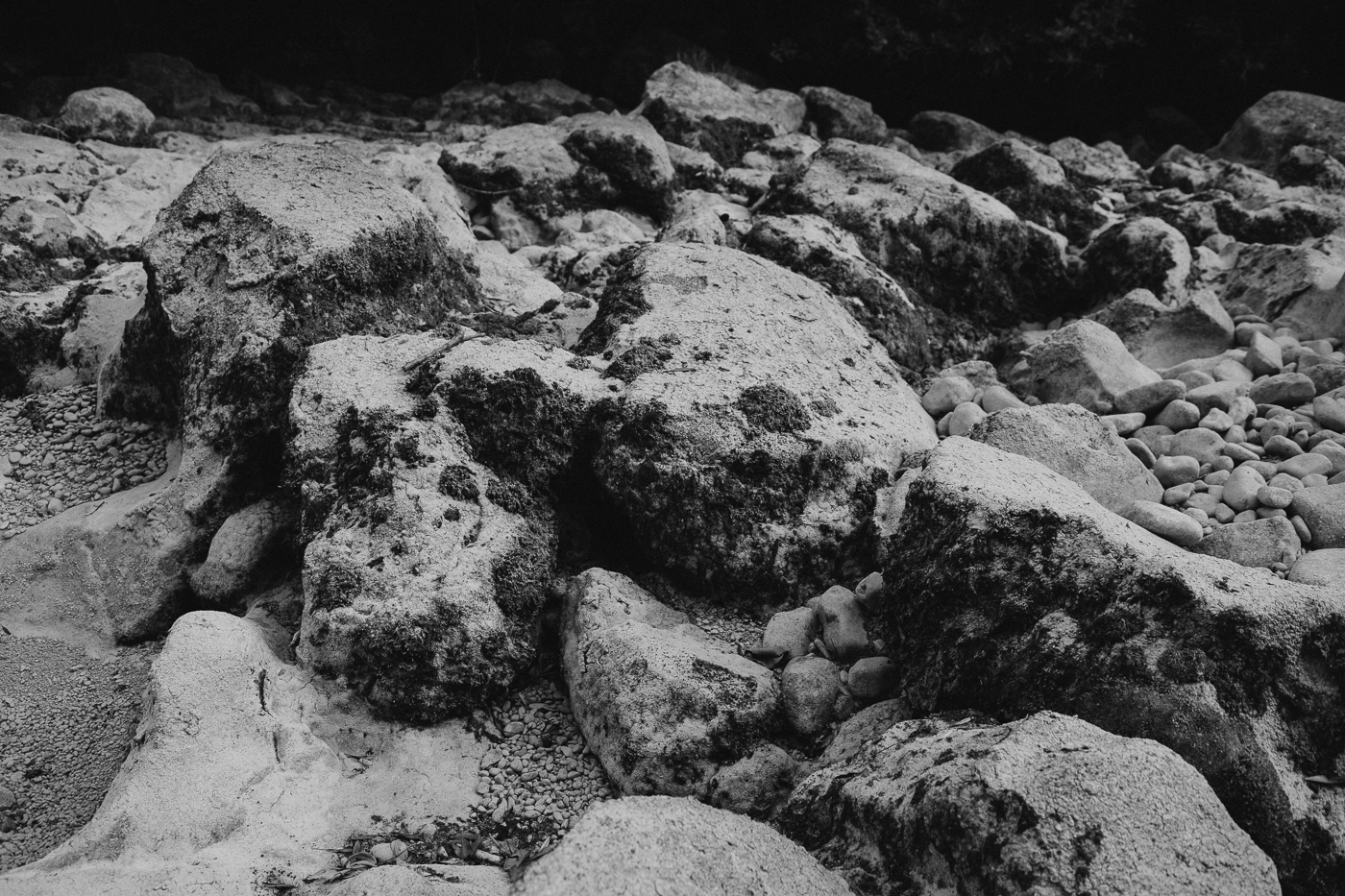
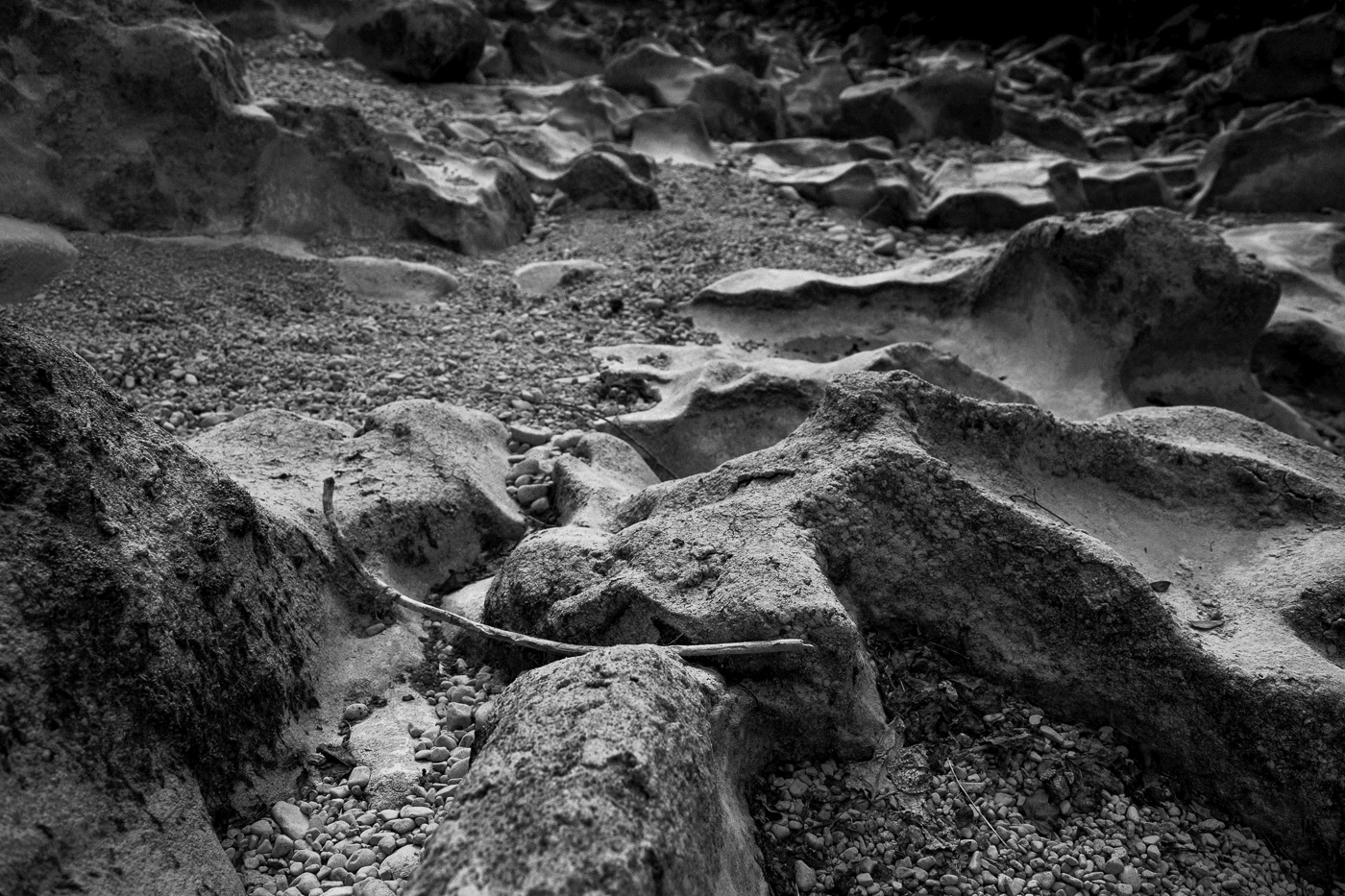
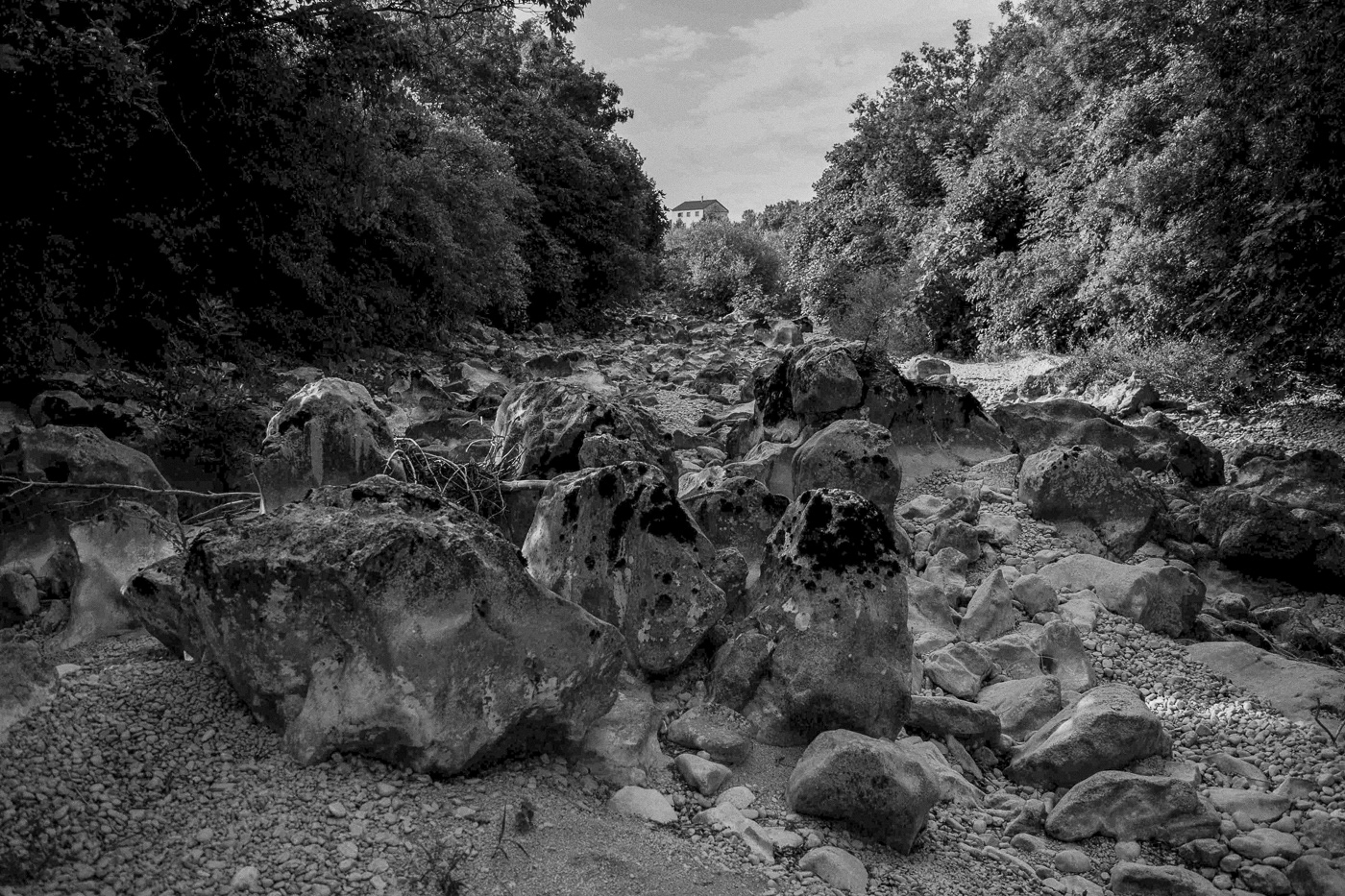
A hot, dry summer. Dry stones and mere traces of water. Hardy green plants, still upright and strong, as though they felt no thirst. How long could they survive, wedged into those dry stones? What would happen if the water never returned?
These questions took on a deeper significance in light of the growing global water crisis, as climate change, pollution and water scarcity increasingly threaten ecosystems, food security and the lives of millions of people.
Inspired by these concerns, I created the photographic series Bones of the Lost River.
The black-and-white photographs portray the river in summer, revealing its dry bed, its inner world. I am fascinated by the textures and shapes of the stones — sculptures fashioned by the hands of nature, inspiring both wonder and fear.
“When the well is dry, we know the worth of water.” — Benjamin Franklin
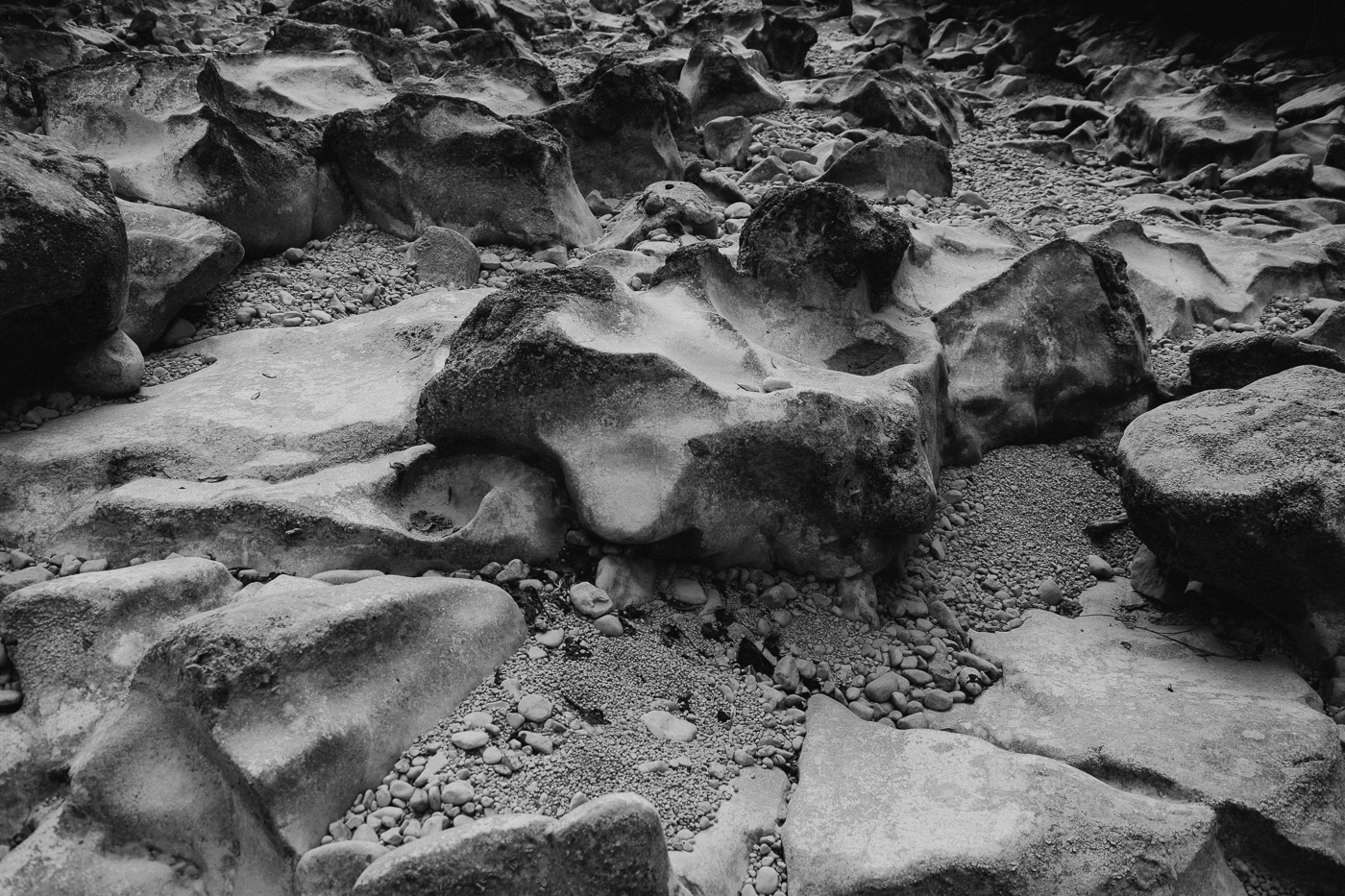
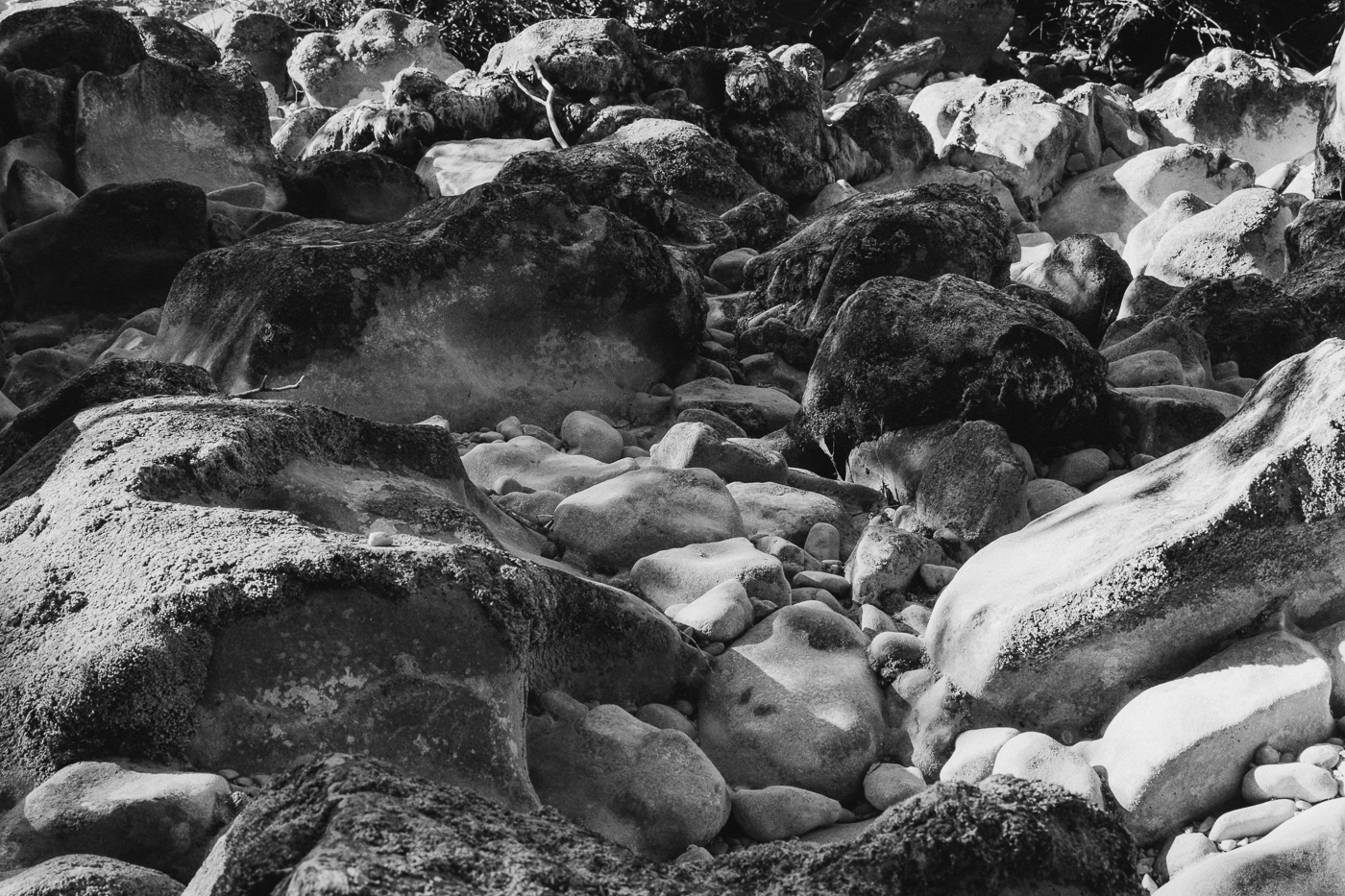
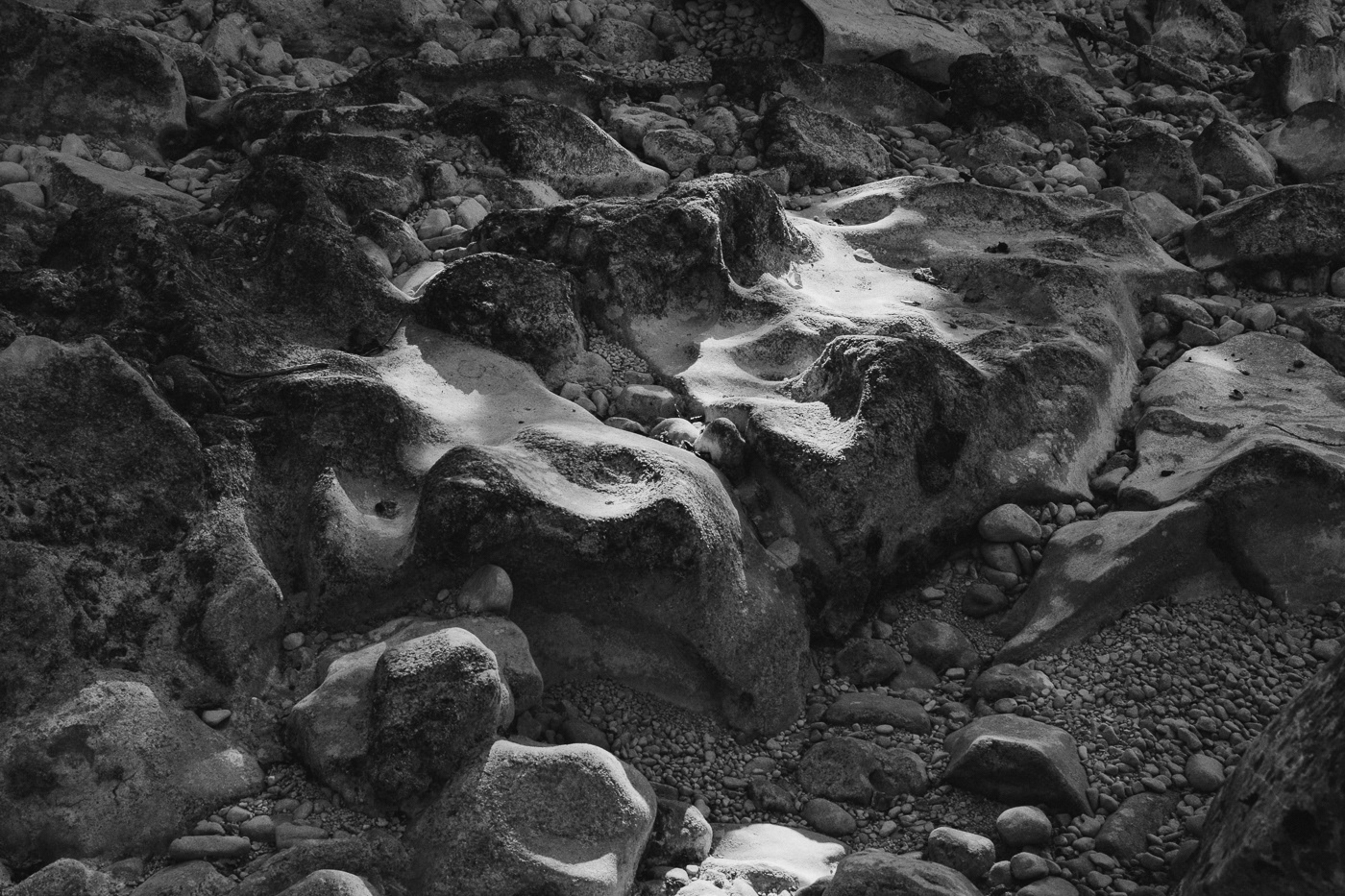
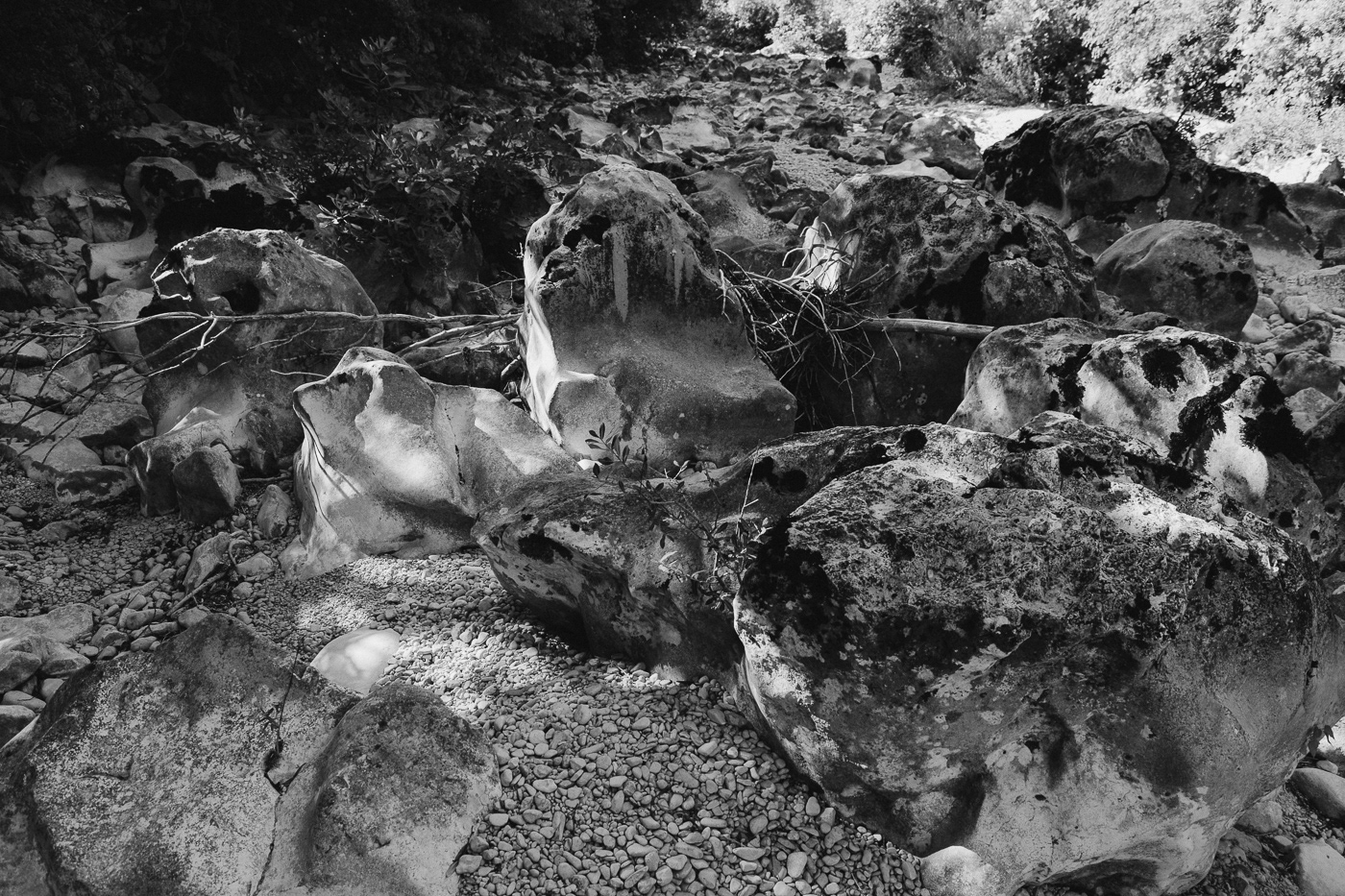


In 2019, the series Bones of the Lost River received an Honorable Mention at The Third Element Photography Competition and was exhibited in Rijeka, Croatia.